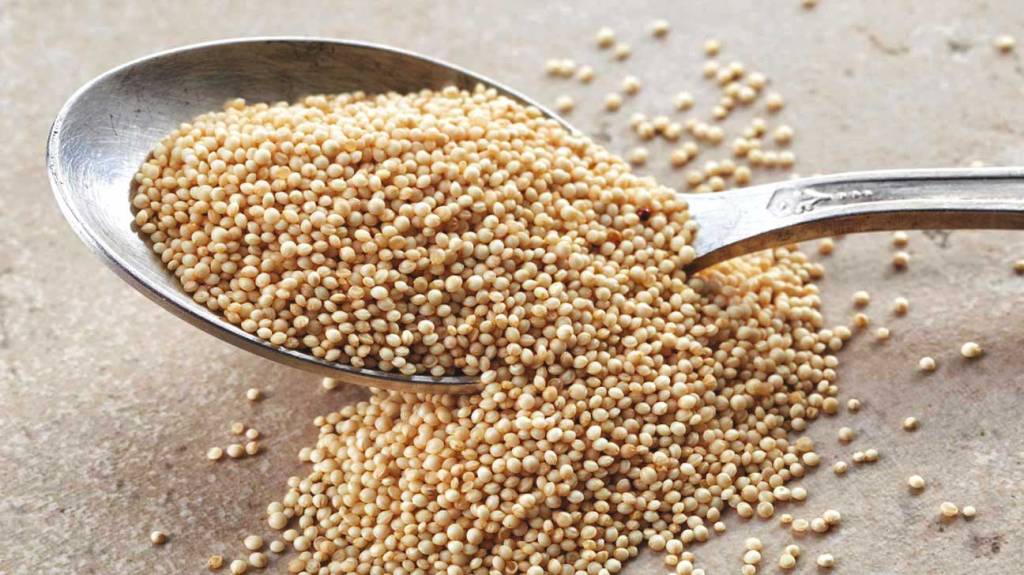
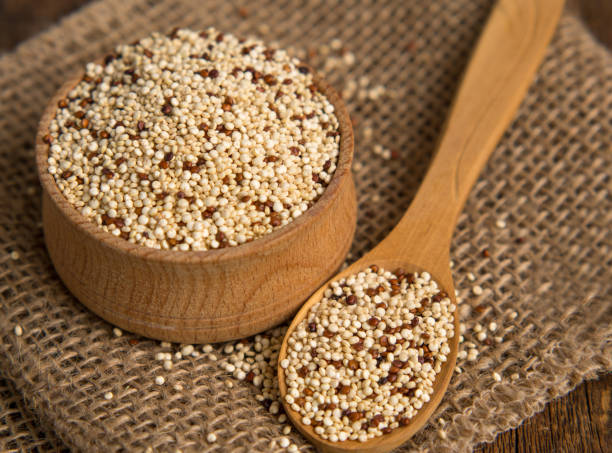
Let’s continue exploring the Mediterranean Diet lifestyle, which encourages us to build meals around grains, colorful fruits and vegetables, beans, lentils, and seeds. Ancient populations in the New World relied on pseudocereals—plant seeds used in cooking like cereal grains. Two important examples are amaranth and quinoa (pronounced KEEN-wa).
Evidence of amaranth cultivation dates back to 5000–4000 BC in the Andes and Mesoamerica. It was a crucial part of the Aztec, Maya, and Inca diets. The Aztecs even used amaranth in religious ceremonies, mixing ground seeds with honey or human blood to form statues of their gods. Because of this, Spanish conquistadors in the 16th century burned amaranth fields and forbade its cultivation. Although some Indigenous people continued to grow it in secret, amaranth remained largely unknown elsewhere until the 1970s, when scientists rediscovered it and recognized its exceptional nutritional value.
Amaranth is naturally gluten-free and rich in fiber, iron, phosphorus, calcium, and manganese. It offers health benefits such as reduced inflammation, lower cholesterol, and improved heart health. Notably, it is a complete protein, containing all essential amino acids—something rare among plant foods. It is also a good source of phenolic acids, which act as antioxidants.
You can find amaranth in stores as whole seeds or flour. It can be cooked like rice, popped like popcorn, or incorporated into baked goods. One of my favorite ways to enjoy it is as a simple pancake-style bread.
Amaranth Pancake Bread
Ingredients:
- 1¼ cups water
- 1 cup uncooked amaranth seeds
- 1 tsp baking powder
- ¼ tsp salt
- Optional: chopped rosemary, everything bagel seasoning, or chopped nuts
Instructions:
- Blend water and amaranth on high until smooth and batter-like.
- Add baking powder and salt; blend briefly to combine.
- Stir in any optional flavorings.
- Heat a lightly oiled pan over medium heat.
- Pour batter into small rounds and cook until browned on the bottom. Flip and cook until done.
We enjoy these drizzled with olive oil, but they’re also delicious with savory toppings.
Amaranth can also be used in porridge, grain bowls, or as a thickener for soups and stews—I often add a tablespoon or two to simmering soup.
Quinoa is another gluten-free pseudocereal and, like amaranth, a complete protein. It’s high in fiber, iron, magnesium, and antioxidants, with similar benefits for heart health and inflammation.
Quinoa originated 5,000–7,000 years ago in the Andean region of South America, near Lake Titicaca. It was domesticated by Indigenous cultures long before the Inca civilization, which considered it sacred. Archaeological evidence suggests quinoa reached North America about 3,000 years ago, likely through early trade routes.
Like amaranth, quinoa cultivation declined after the Spanish conquest but saw a resurgence in the 1970s. Today, it’s widely used in salads, soups, porridges, and as a rice substitute—or even ground into flour.
At home, we often combine quinoa with brown rice or use it in dishes like chili and fried “rice.” Here’s a favorite:
Quinoa Fried Rice (Serves 4)
Ingredients:
- 1 cup cooked quinoa (cook in vegetable broth for extra flavor; 1:2 ratio)
- Kosher salt
- 1 Tbsp sesame or olive oil
- 1 large onion, diced
- 1 large carrot, peeled and diced
- 1½ cups frozen peas
- 2 garlic cloves, minced
- 2 Tbsp soy sauce or gluten-free tamari
- 3 large eggs, whisked
- Green onions, sliced (for garnish)
Instructions:
- Heat oil in a large skillet over medium heat.
- Add onion, carrot, and peas; cook until tender (8–10 minutes).
- Stir in garlic and soy sauce; cook for 1 minute.
- Add eggs and scramble.
- Stir in quinoa and heat through (about 3 minutes).
- Drizzle with oil and garnish with green onions.
I hope you enjoyed exploring these ancient pseudocereals! Next time, we’ll talk about rice.

 Marcia C McCormack, BSN, RN, PHN, FCN
Leave a comment