During the last two months, I’ve introduced you to the Mediterranean diet lifestyle, which emphasizes whole grains, colorful fruits and vegetables, legumes, nuts, seafood, and olive oil. This approach also encourages limiting ultra-processed foods and excessive amounts of red meat and saturated fats. We’ve seen how this diet promotes health and decreases our chances of developing chronic conditions such as heart disease, Type 2 diabetes, dementia, and Alzheimer’s disease.
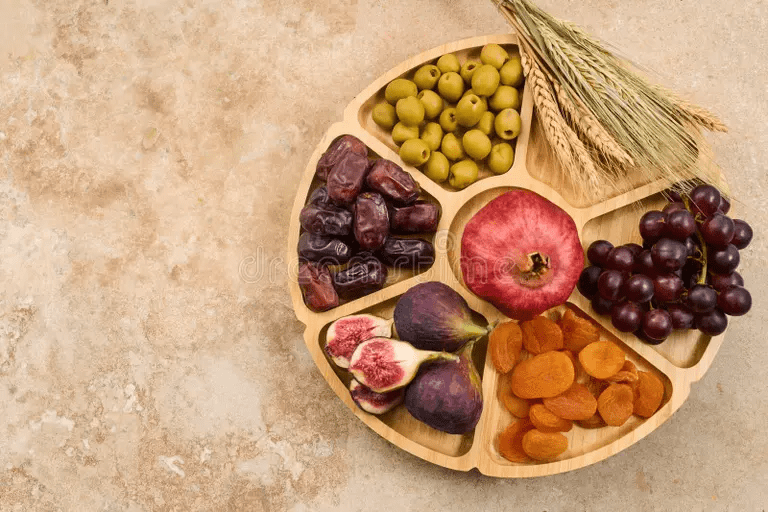
As I close this series, I thought you might find it interesting to explore the “Seven Species.” This is the foundational list of grains and fruits celebrated in the Old Testament (Deuteronomy 8:8) for both their spiritual and nutritional significance.
- Wheat and Barley: These were the staple grains of the ancient Levant (please see my March 17 and April 6, 2026 posts).
- Grapes: Important as both fresh and dried fruit (raisins), grapes were also fermented into wine to preserve food and feature in religious offerings. Grapes are mentioned dozens of times in the Bible, often as symbols of agricultural abundance, God’s provision, and the nation of Israel.
- Figs: One of the earliest domesticated fruits, figs were eaten fresh or dried and pressed into dense cakes. They are mentioned throughout the Old Testament as a dietary staple and as a powerful spiritual metaphor for peace, prosperity, and the blessings of God’s covenant.
- Pomegranates: This was a familiar fruit in ancient Israel (Numbers 13:23, Deuteronomy 8:8). It is first mentioned in the Bible to describe the adornments on sacred priestly garments (Exodus 28:33-35).
- Olives: Olives were pressed to make olive oil, which was used as a cooking fat, a source of light, and a sacred element in anointing rituals. They were a symbol of peace and renewal (Genesis 8:11), a metaphor for righteousness (Psalm 52:8), a poetic symbol of judgment (Isaiah 17:6; 24:13), and a representation of the people of Israel (Jeremiah 11:16).
- Dates: Cultivated in arid regions, dates were a major source of sugar and calories. Biblical “honey” often referred to the thick, sweet syrup made from pressed dates. They were considered a dietary staple (1 Chronicles 16:3), represented fertility and the richness of the Promised Land (Deuteronomy 8:8), and served as a symbol of beauty and grace. The fruit’s Hebrew name (tamar – תמר) was frequently given to biblical women, such as King David’s daughter (2 Samuel 13:1).
Along with the Seven Species, the diet of the ancient Israelites included legumes (like lentils and chickpeas) and vegetables such as leeks, cucumbers, onions, and garlic. They also enjoyed nuts (like pistachios and almonds) and a variety of herbs and spices, including coriander, cumin, and mint.
The Mystery of the Forbidden Fruit
At this point, you may be thinking, “This is all interesting, Marcia, but what about the apple? Isn’t it the forbidden fruit eaten by Adam and Eve in Genesis?”
While the apple is mentioned several times in the Old Testament—especially as a symbol of sweetness and beauty—the forbidden fruit itself is never actually identified as an apple.
The Hebrew word tappuach (תפוח – apple) is found in the Song of Solomon (“As an apple tree among the trees of the forest, so is my beloved”) and in Proverbs (“A word fitly spoken is like apples of gold in a setting of silver”).
So, how did the “fruit of the tree of the knowledge of good and evil” become an apple? Scholars have been debating this question for centuries. Early Jewish and Christian commentators identified several other suspects, including the grape, the pomegranate, and the citron.
A Linguistic Quirk?
The definitive answer actually traces back to 12th-century France, where Latin heavily influenced the culture. Latin authors commonly referred to the forbidden fruit simply as a pomum, which originally just meant “fruit.” Old French adapted this to the term pom. While pom initially meant any fruit, it later took on the specific meaning of “apple.” Once that linguistic shift happened, French artists began depicting Adam and Eve holding apples, and the image stuck.
Later, in the 17th century, scholars noted that the apple fell victim to another quirk in the Latin language. The Latin word for apple is malum, which also happens to mean “evil.” Because eating the forbidden fruit caused the fall of Man, malum (the apple) took the blame for the ultimate malum (evil).
The Modern Apple
Having said all that, contemporary nutritionists celebrate the apple as a powerhouse of health. It is loaded with antioxidants, flavonoids, pectin, water, vitamins, and minerals that support our heart, brain, and digestive health.
In fact, eating apples regularly lowers our risk of developing:
- Type 2 diabetes
- Asthma
- Certain forms of cancer (specifically colorectal and lung)
So, let’s celebrate the malum, pomum, and pom! As the old saying advises, let’s eat an apple every day!
I hope you’ve enjoyed learning about the life-affirming, anti-aging Mediterranean diet lifestyle and will consider adapting it to your own routine. I’ve included some of my favorite recipes in earlier posts, and I hope you give them a try.
Next up: We’re going to explore the health and healing benefits of flowers!


Leave a Reply