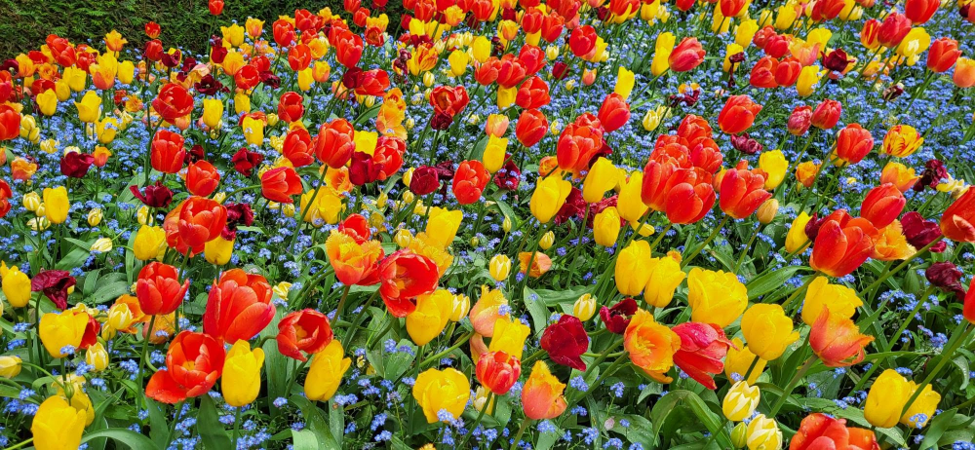
We routinely give and receive flowers for life’s milestone moments—birthdays, anniversaries, welcoming a new baby, Mother’s Day, or as “get well” wishes delivered to a home or hospital bed. It’s intuitive to say these gestures make us happy. But what if there’s concrete scientific evidence that flowers actively alter our brain chemistry to dispel anxiety, promote happiness, and stimulate physical recovery?
Over the last few decades, researchers have studied plants and flowers as legitimate, non-invasive actors in complementary medicine. From clinical trials with hospitalized patients to advanced neurological brain mapping, the data is clear: plants and flowers actively change our physiology, lower our pain thresholds, and accelerate healing.
Here is a summary of these remarkable scientific findings.
1. Accelerated Surgical Recovery & Reduced Pain Medication
One of the most famous breakthroughs in this field came from a clinical trial evaluating patients recovering from abdominal surgery. The post-op patients were placed in identical rooms, but with one key variable: half the rooms featured foliage and flowering plants (like orchids and lilies), while the other half had none.
The results for the patients in the flower-filled rooms were impressive:
- Lower Analgesic Use: Patients required significantly fewer doses of postoperative pain medication.
- Stable Vital Signs: Patients maintained lower blood pressure and decreased heart rates.
- Symptom Reduction: Patients reported drastically lower objective and subjective ratings of pain, anxiety, and fatigue.
- Shorter Hospital Stays: Patients were discharged earlier than those in the control group.
2. The Neuroscience of “Flower Viewing”
To understand why this happens, neuroscientists have used electroencephalograms (EEGs) and neuroimaging to track real-time brain activity. When a person undergoing acute stress is shown a floral image or a fresh arrangement, the brain shifts rapidly:
- The Amygdala-Hippocampus Axis: Exposure to flowers downregulates overactivity in the amygdala (the brain’s fear and stress center), lowering cortisol levels and mitigating the body’s fight-or-flight response.
- Autonomic Nervous System Shift: Within four to six minutes of viewing plants and flowers, there is a distinct drop in muscle tension and a spike in parasympathetic activity (the system responsible for rest and cellular healing).
While green foliage plants are excellent for air purification, studies comparing foliage alone to flowering plants show that the introduction of color and soft scent triggers a much stronger neural response. The brain rewards the sight and scent of a flower by releasing dopamine and serotonin, creating an immediate, involuntary wave of peace and happiness.
How Flower Colors Manipulate the Brain
Our brains do not process a flower as a single, static object. Instead, the brain breaks it down into specific wavelengths of light (color) and scent, which travel along distinct neural pathways to alter our physiology.
- Warm Hues (Reds, Oranges, Bright Yellows): Looking at warm colors for just three minutes triggers a spike in alpha relative power in the prefrontal lobe. Alpha waves are associated with a relaxed yet highly focused mind, reducing mental stress while improving memory performance. On the Profile of Mood States questionnaire, these flowers boosted the “vigor” subscale, acting as a non-invasive, cognitive pick-me-up.
- Cool and Muted Colors (Blues, Purples, Mauves): These tones foster deep tranquility by quieting the sympathetic nervous system. Blue flowers are uniquely effective at lowering diastolic blood pressure and reducing cognitive load. They are highly recommended for high-stress recovery environments, psychiatric wards, or spaces where severe anxiety needs to be mitigated.
What About Artificial Flowers?
You might say, “Marcia, this sounds great. But what if I’m just looking at a photo or an artificial flower?”
Research shows that while being in the physical presence of fresh flowers provides the most powerful neuro-chemical shift, looking at artificial flowers or high-quality images triggers a similar, albeit less intense, effect. Because our brains are genetically wired to respond to nature (biophilia), artificial sources can still stimulate those same neurological pathways.
However, artificial blooms lack one critical, fast-acting component: floral scent.
The Fast-Track Effect of Floral Scents
The way we process scent is fundamentally different from how we process color. While visual data must pass through the brain’s central relay station (the thalamus) before we consciously register it, our sense of smell bypasses it entirely.
When you inhale a flower’s scent, its volatile organic compounds hit your olfactory bulb, which connects directly to the limbic system (the emotion center, including the amygdala) and the hippocampus (the memory hub). This direct anatomical highway is why scent can alter our mood more quickly than almost any other sensory stimulus.
How Specific Flowers Change Your Brain Chemistry
Different flowers carry unique chemical signatures that prompt the brain to release specific neurotransmitters:
| Flower | Brain Reaction | The Result |
| Lavender (The Calmer) | Contains high amounts of linalool and linalyl acetate, which stimulate relaxation-inducing alpha brain waves. | Downregulates the fight-or-flight response, slows a racing heart, and lowers cortisol levels. |
| Rose (The Comforter) | Triggers the release of endorphins and subtle amounts of dopamine—the brain’s feel-good chemicals. | Produces a pronounced anxiolytic (anxiety-reducing) effect, promoting feelings of security and connection. |
| Jasmine & Gardenia (The Uplifters) | Interacts with the central nervous system to specifically encourage the release of serotonin. | Mildly stimulating rather than sedating; clears brain fog, boosts alertness, and enhances energetic optimism. |
| Chamomile & Neroli (The Sedatives) | Interacts gently with GABA receptors, the brain’s internal “brake pedal” for central nervous system activity. | Quiets overactive mental chatter, making it incredibly effective for easing insomnia and deep physical tension. |
Invite More Blooms Into Your Life
Flowers are far more than simple, passive decorations—they are potent tools for well-being. I hope this inspires you to bring more blooms into your home, your garden, your workspace, and other environments.
Next time, we’ll continue our deep dive into the healing power of nature with an exploration of the Japanese-inspired practice of Shinrin-yoku (“Forest Bathing”). Until then, happy flower-gazing!


Leave a Reply