Kon’nichiwa!
In my last post, we saw that scientific research supports the fact that gazing at flowers can heal us. In this post, we’re going to explore the Japanese practice of forest bathing, called Shinrin-yoku (森林浴).
The term was coined in 1982 by Tomohide Akiyama, the head of Japan’s Ministry of Agriculture, Forestry, and Fisheries. It literally translates to “bathing in the forest atmosphere”—meaning a peaceful, sensory pause in nature.
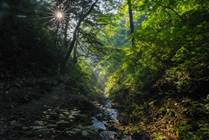
Forest bathing involves immersing yourself in nature and taking in your surroundings through your five senses. It isn’t a rigorous hike with a distance or step-count goal. It’s simply about being in nature, slowing down, and letting the forest wash over you.
Why Japan Turned to the Trees
Back in the 1980s, Japan was in the middle of a massive tech boom. People were flocking to congested cities, working long hours, and experiencing unprecedented levels of burnout. So, the government introduced Shinrin-yoku as a national health program.
The initiative served two purposes: to provide an antidote to tech-induced stress and to encourage people to value and protect the country’s beautiful forests. Today, it’s a cornerstone of a preventative healthcare program in Japan and is a growing global wellness movement.
The Real, Physiological Benefits of Forest Bathing
Forest bathing isn’t just a pleasant walk; it has tangible, biological benefits. Trees emit airborne organic compounds called phytoncides to protect themselves from insects and disease. When we inhale them, our bodies respond dramatically:
- Reduction in Stress: Studies show that spending time among trees significantly lowers our primary stress hormone (cortisol) levels as well as our blood pressure.
- Immunity Boost: Our count of natural killer (NK) cells, which help fight infections, increases.
- Improved Focus: Spending deliberate time in the forest rests the prefrontal cortex of our brain and resets our attention span.
How to Forest Bathe (Step-by-Step)
- Leave the Tech Behind: No phones, no fitness trackers, no distractions. Or, as we used to say back in Brooklyn, “no nuttin’!” The goal is to disconnect entirely.
- Move Without a Goal: Don’t worry about how far you’re going, how many steps you’re taking, or where you’re heading. Wander around aimlessly!
- Engage Your Five Senses:
- Listen to the wind rustling the leaves.
- Look at the different shades of green and how the sunlight filters through the canopy.
- Touch the bark of a tree to notice its texture, or dip your fingers in a stream and note the temperature.
- Smell the damp earth and pine needles.
- Sit with It: Find a quiet spot to sit for 10 to 15 minutes, just observing the natural world around you.
No Forest? No Problem! How to Forest Bathe Anywhere
Some of you may be thinking, “Well, Marcia, this sounds great! But I live in the middle of a concrete jungle! How can I incorporate forest bathing into my life?”
Well, I’ve got good news for you! You can practice this sensory connection to nature no matter where you live:
- The “Micro-Forest” (Urban Parks and Gardens): You don’t need miles of uninterrupted wilderness. A local botanical garden, a quiet city park, a tree-lined campus, or a green neighborhood walkway will work beautifully. The key is to look up at the tree canopy or down at the grass instead of looking at the buildings in the background. Isolate natural sounds, like birds chirping or the wind rustling through the leaves, and—for goodness’ sake—tune out the traffic!
- Bring the “Phytoncides” Indoors: If you can’t get to the trees, let the trees come to you. You can trigger the same nervous system relaxation right at home:
- Essential Oils: Diffuse essential oils rich in alpha-pinene and limonene (the active compounds in phytoncides). Look for high-quality Hinoki cypress, Scotch pine, cedarwood, or Siberian fir oils.
- Houseplants: Filling your living space with plants isn’t just an aesthetic trend; looking at green foliage actively lowers anxiety and improves indoor air quality.
- Sky Bathing (Kumo-yoku): If you’re completely surrounded by concrete, simply look up. Find a patch of grass, a park bench, or a balcony, and spend 15 minutes watching the clouds. Focus entirely on the shifting shapes, the way the wind moves them, and the vastness of the sky. This triggers the exact same “soft fascination” state that helps restore your brain’s focus.
- Audio-Sensory Bathing: If you are stuck inside or have limited mobility, research shows that listening to natural soundscapes (like rain, forest birds, or ocean waves) on high-quality headphones can still lower your heart rate variability and reduce stress levels. Close your eyes, put on a nature soundscape, and focus purely on the sounds.
The Science of “Virtual Nature”
There is also wonderful news for people who enjoy having landscape art in their homes. Our brains are hardwired to recognize and respond to natural patterns. When you look at an image of a forest, a few key things happen biologically:
- Activates the “Vagal Brake”: Studies show that viewing nature images activates your parasympathetic nervous system (the “rest-and-digest” response). This acts as a feedback signal that tells your body it is safe to relax, which actively lowers your heart rate and blood pressure.
- Speeds Up Stress Recovery: Researchers have found that while looking at photos of greenery before a stressful task doesn’t “buffer” the stress, looking at them afterward significantly speeds up how fast your body and mind recover from acute stress.
- Decreases Mental Fatigue: Looking at man-made, urban geometry (sharp angles and hard lines) requires “directed attention,” which drains our mental energy. Looking at trees, clouds, or natural landscapes engages “soft fascination”—effortless attention that actually restores our cognitive focus and creativity.
Photos vs. Art: Which is Better?
Both work, but they engage the brain in slightly different ways:
| Medium | How it Helps | Why it Works |
| Nature Photography | Realistic Restoration | High-definition photos of forests, foliage, or water elements closely mimic real-world visual cues, tricking the brain into a state of calm and physically lowering cortisol. |
| Paintings & Art | Emotional Resonance | Landscape art or impressionistic paintings of nature (like Monet’s water lilies or classic forest landscapes) engage the brain’s default mode network. They invite contemplation and positive emotional shifts, which indirectly ease physical tension. |
The “Window View” Breakthrough
This visual connection is so powerful that it actually revolutionized modern hospital design. In a famous, groundbreaking study by researcher Roger Ulrich, patients recovering from surgery who had a window view of trees healed faster, tolerated pain better, and required fewer strong pain medications than patients whose windows faced a brick wall.
So, Are You Ready to Forest Bathe?
Whether you take a walk in an actual forest, visit a botanical garden, stroll through a tree-lined neighborhood, or just spend a few minutes gazing at a beautiful landscape painting, you can enjoy the healing health benefits of forest bathing.
I’d love to hear from you! Please leave a note in the comments section below and tell us what type of forest bathing you enjoy doing!
Next time, we’ll see how being on or near water has wonderful, healthy benefits for our minds and bodies!


Leave a Reply