When we think about our physical body, we usually focus on the big players: bones, muscles, and organs. But weaving through every single layer of our body—from the surface of our skin to the innermost depths of our joints—is a silent, continuous web that holds it all together.
It’s called fascia (pronounced FASH-ee-uh), and modern medicine is rediscovering just how vital this dynamic matrix is to our everyday mobility, posture, and freedom from pain.
What Exactly Is Fascia?
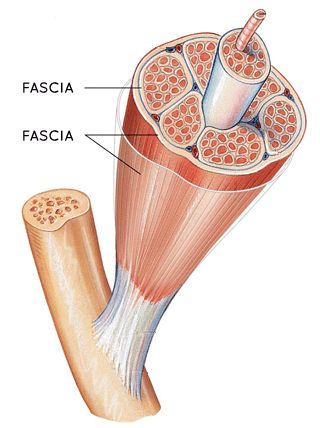
Imagine an orange. If you peel away the outer orange skin, you see a white, fibrous layer beneath. When you pull apart the segments, each juicy pulp packet is wrapped in a thin, translucent membrane.
Fascia is very similar. Made primarily of tough collagen fibers, elastic elastin, and a fluid-rich ground substance containing hyaluronic acid, fascia is an uninterrupted, three-dimensional web. It coats every muscle fiber, wraps around whole muscles, encases bones and nerves, and cradles our internal organs. Without fascia, our body would lose its structure and shape entirely.
What Does Fascia Do?
Fascia is much more than just “packing material.” It performs critical functions every second of the day:
- Structural Integrity & Support: It keeps our internal organs suspended in place and creates a continuous network of tension that helps us stand upright without tiring our muscles.
- Friction-Free Sliding: Healthy fascia produces a lubricated fluid that allows muscles to glide smoothly over one another as we move.
- Sensory Perception: Fascia is packed with nerve endings—in fact, some experts consider it one of our richest sensory organs. It communicates constantly with our brain about where our body is in space (proprioception).
- Shock Absorption: As we walk, reach, or jump, fascia absorbs and distributes mechanical stress throughout the entire body network rather than letting a single joint take all the impact.
What Happens When We Don’t Take Care of It?
When fascia is healthy, it’s moist, springy, flexible, and glides easily. But when it isn’t cared for, it changes character:
- Adhesions & “Knotting”: Lack of movement, chronic stress, dehydration, or repetitive strain causes the fluid between fascia layers to dry up. The layers stick together, creating stiff adhesions or painful “trigger points.”
- Chronic Stiffness & Reduced Range of Motion: Unhealthy fascia tightens up like a wool sweater washed in hot water, making everyday tasks like bending down feel rigid and uncomfortable.
- Referred Pain: Because fascia is one continuous web, tight fascia in one area can pull on distant regions. Tightness in our foot fascia (plantar fascia) can pull all the way up the back of our leg to cause lower back pain!
How to Care for Your Fascia Every Day
The good news is that fascia is remarkably adaptable (plastic) and responds quickly to gentle, mindful care:
- Hydrate Consistently: Fascia requires water to maintain its slippery, gel-like state. Drinking water throughout the day keeps the tissue lubricated and bouncy.
- Change Positions Frequently: Prolonged sitting or standing in one place causes fascia to set in fixed patterns. Take short movement breaks every 30 to 60 minutes.
- Practice Mindful Deep Breathing: Deep diaphragmatic breathing expands the thoracic fascia from the inside out, reducing tension across the back and rib cage.
- Gentle Myofascial Release: Using a soft foam roller, a gentle massage ball, or receiving professional myofascial therapy helps release bound-up tissue and restores fluid flow.
Simple Exercises to Keep Your Fascia Springy and Fluid
Unlike traditional muscle workouts that focus on heavy resistance, fascia responds best to multi-directional, smooth, undulating movement.
1. The Full-Body “Panda Stretch” & Sway
Instead of holding a rigid, static stretch, reach your arms overhead and gently sway your torso from side to side like a tall palm tree in a light breeze. Move dynamically in spiral or curving shapes to hydrate the diagonal lines of fascia.
2. Gentle Tennis Ball Foot Roll
Sit comfortably in a chair and place a tennis ball or small soft massage ball under the arch of your foot. Roll it slowly back and forth from your heel to your toes with light pressure. This simple 2-minute routine gently releases the entire plantar fascia and sends relaxing signals up the back line of your body.
3. Multi-Directional Lunges & Reaches
Step forward in a soft lunge, but vary your direction slightly each time—step at 12 o’clock, 1 o’clock, then 11 o’clock—while gently reaching your arms out. Moving in varied planes keeps the multi-directional fibers of fascia supple and resilient.
A Mindful Reflection on God’s Workmanship
When we look at the intricate, interconnected web of fascia, it’s hard not to feel a sense of wonder at how wonderfully we are constructed (Psalm 139:14). It reminds us that no part of our body functions in isolation—we are intricately woven together by design, reflecting strength, flexibility, and grace.


Leave a Reply